
Betahistine Blues

It’s 1981 and I’m 12 years old. I’ve just kicked the red rubber ball as hard as I can, line-driving it past the pitcher and sprinting toward first base on the Northview Middle School playing field, a big, splotchy combination of green and dry grass.
I’m already an athlete and get picked first for co-ed teams. So I’m confident as I dash to reach my target before I’m tagged out, which I do with flying colors and sliding body, causing my team to whoop and holler at my daredevil crash landing.
Only, I didn’t intend to crash, slide, or put on a show. A dizzy spell hit me as I ran, and I fell into the base, safe but confused, not understanding this new, unsteady, and disorienting feeling.
I go on to live with this sensation, on and off, for years, managing to excel in school despite it. My hearing starts to falter in high school. My ears develop a chorus of high and low ringing sounds that eventually become permanent.
After several years of free clinics, ENTs, and an incorrect instruction to “have more salt,” flash-forward to age 28 at the Stanford Ear Institute, and I finally have a diagnosis: Ménière’s Disease. Along with this comes a med prescription, a care package of diuretics, Propranolol, and Valium.
Twenty years after this, vestibular migraine gets added to the Ménière’s diagnosis.
Jump cut to Superior Court of Yolo County, June 30, 2026. The spells return yet again as I try to hold steady until I can make it out of the building.
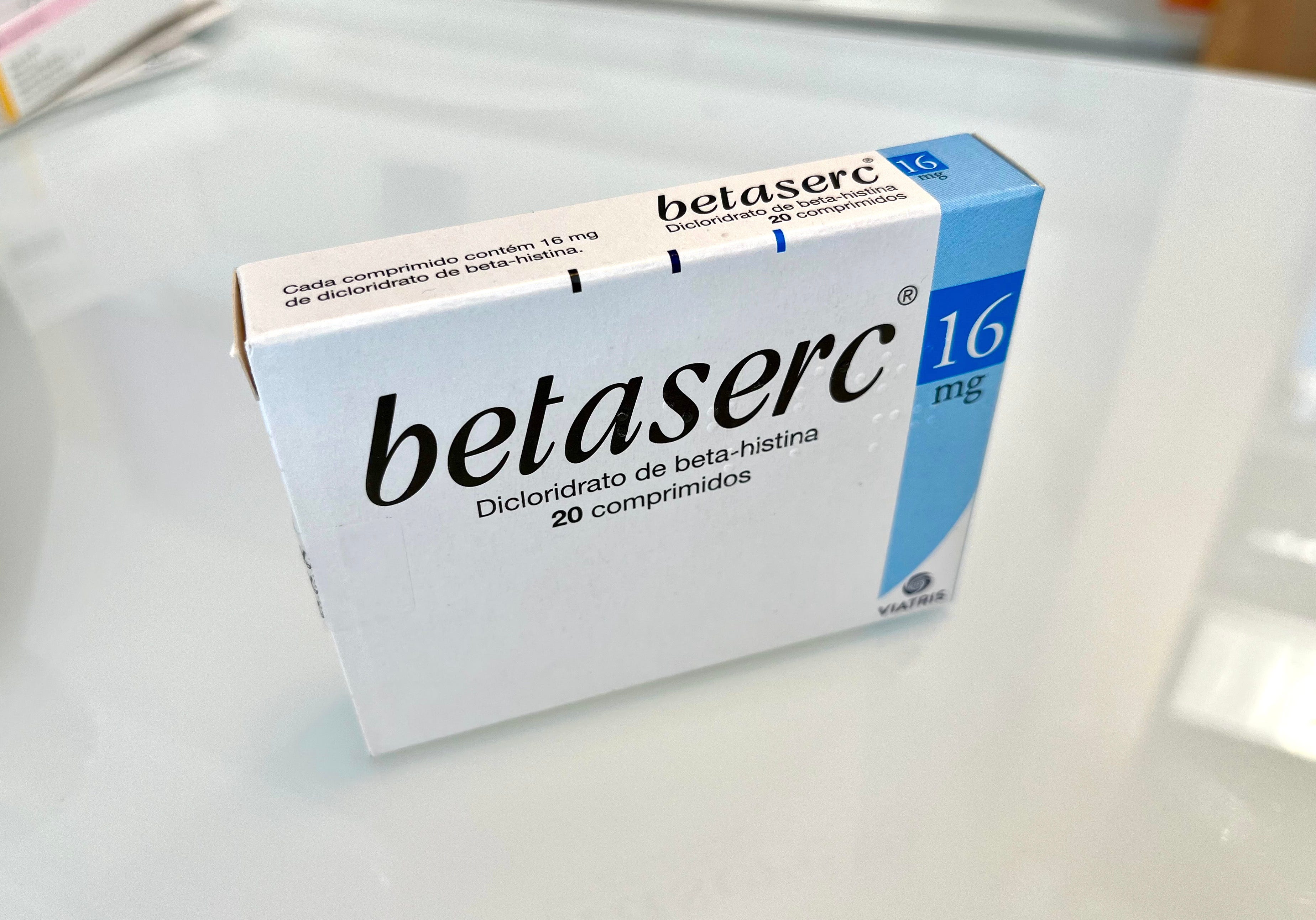
Cross-fade to last week and a new character introduction, the hero in our story: betahistine. From the NHS website:
Betahistine is a medicine used to treat the symptoms of Ménière’s disease.
These symptoms include:
feeling dizzy and a spinning sensation (vertigo)
ringing in the ears (tinnitus)
loss of hearing
feeling sick (nausea)
Ding ding ding. That’s me. On the nose.
Approved by the FDA in 1966, this approval for betahistine was withdrawn in 1972 after the U.S. medical community cited unsatisfactory evidence that the drug actually worked. Still, it continues to be approved and readily available in over 100 countries.
Regardless of what anti-establishment stance one holds on Big Pharma—either American medical dysfunction or European pharma greed (or both)—a Berlin urgent care doctor saw me for free and prescribed betahistine at a cost of $30, half of what I’ll pay for the same in the U.S., available only through a compounding pharmacy.
As of this writing, I’m in Lisbon. Wanting to bring some of this miracle drug back home, I walked into a pharmacy and the kind woman behind the counter took my Berlin prescription, photocopied it, turned around, opened a wide drawer, and pulled out Betaserc, the brand name for betahistine. Cost? Five bucks. I got more in the Lisbon airport.
After over 45 years since sliding into first base and my current, much-needed vacation featuring socialized medicine, I have hope.
Which is all to say, I’ve spent almost my entire life with a chronic illness that, had I received the right treatment early enough in my home country—the one that’s supposed to promote the general welfare—I might have prevented tinnitus, vertigo, and hearing loss. I mourn for the confused 12-year-old who had to suffer through years of a recurring, episodic condition with no cure. At the same time, I’m optimistic for the adult who gets to walk through more of life in a straight line.
What happened to Northview Middle School? It doesn’t exist anymore. Where the old kickball game took place now stands California School of the Arts, San Gabriel Valley. It boasts of being an “unparalleled arts and academic education in a creative, challenging, and nurturing environment to a diverse student body passionate about the arts, preparing them to reach their highest potential.”
Northview no longer exists, but I do. With the right meds and a lot of care, I’m more prepared to keep reaching for that highest potential.
Yeah. Private insurance is drifting into Portugal. U.S. greed mongers are here, doing everything they can to parasitize the system. Portuguese culture, however, is built on very personal relationships. So, the push to weaken system is, at the very least, going slowly for the greedy. I wish Americans understood that not everything in the world is a commodity, and not every function on Earth needs to be "optimized." I can't see Universal Healthcare on the horizon for the U.S. Until people stop seeing the sentient creature in the mirror through the lens of empire, they won't feel compassion for what they see. If they can't love themselves, they can't love others. That, is sad. Be well my cousin.
Sigh (for the pathetic and frustrating state of US medical care), and awesome (for the procurement of the miracle drug)!